Introduction
Most shippers think they understand drayage.
A container lands. A truck picks it up. It moves inland.
And yet, drayage remains one of the most common sources of hidden cost, missed commitments, and downstream chaos in global supply chains. Not because the distance is long, but because the execution environment is unforgiving.
What you are really paying for in drayage services is not transportation. You are paying for control inside constrained systems.
Why Drayage Breaks When Everything Else Looks Fine
Drayage operates where margins for error are smallest:
- terminal appointment windows
- chassis pools with limited slack
- rail cutoffs that don't wait
- customs and release conditions that must align precisely
When drayage fails, it is rarely dramatic. Containers do not vanish. Trucks do not stop showing up.
Instead, cost accumulates quietly:
- a rolled appointment here
- a missed free-time window there
- a correction made after dispatch
This is why two drayage companies can quote similar rates and produce radically different outcomes.
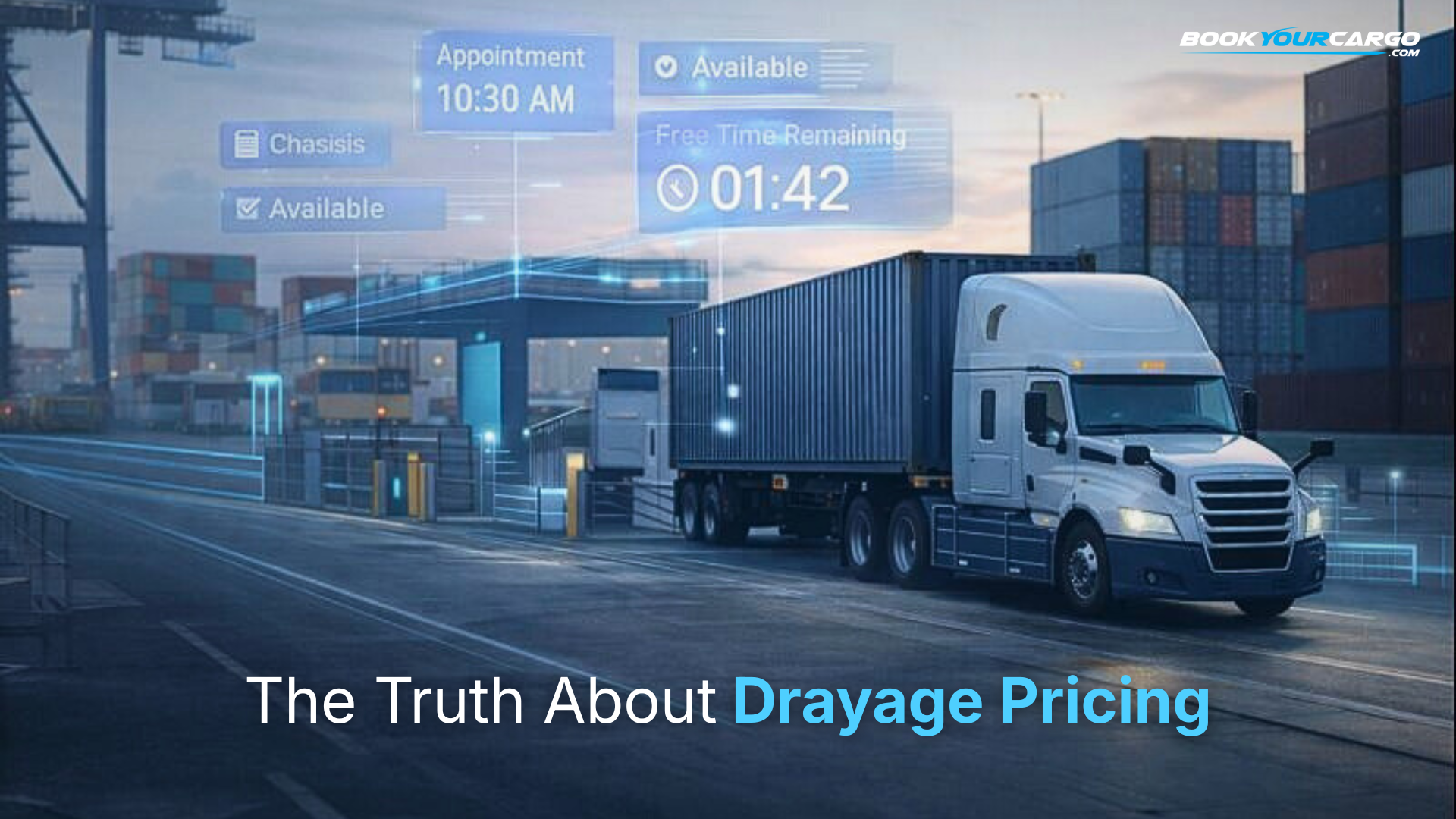
The Truth About Drayage Pricing
Drayage rates are not priced by miles. They are priced by exposure.
Exposure to:
- terminal behavior
- appointment scarcity
- chassis availability
- documentation accuracy
- exception timing
A drayage company that prices only on the mileage is pushing that exposure back onto the shipper. A structured drayage provider absorbs that exposure internally through planning and execution discipline.
That difference is what separates average drayage services from high-control execution models like Book Your Cargo.
What You Are Actually Paying For in Drayage Services
1. Appointment Control
Appointments are capacity. Once missed, they are rarely recovered cleanly.
High-performing drayage companies treat appointment slots as assets to be protected, sequenced, and re-optimized. Weak providers treat them as calendar entries.
This single difference often determines whether demurrage appears on the invoice or not.
2. Terminal-Specific Execution Knowledge
Every port behaves differently. Every rail ramp ages containers differently.
Drayage companies without terminal-specific playbooks lose time before the truck even rolls. BYC's drayage model embeds terminal behavior into planning logic so execution reflects how each gateway actually works.
3. Chassis Reality
Chassis planning is one of the most underestimated cost drivers in drayage.
When chassis availability is assumed instead of planned, pickups slip. When pickups slip, free time erodes. When free time erodes, costs explode.
Structured drayage services account for chassis constraints before dispatch, not after failure.
4. Documentation Alignment
Many drayage delays are not trucking problems at all. They are documentation problems discovered too late.
Late customs releases, incorrect filings, or missing confirmations halt containers at the gate. The best drayage companies align paperwork with movement timing, preventing corrections after the truck arrives.
5. Exception Timing
Every port experiences disruption. The question is when you learn about it.
Reactive drayage services surface exceptions after the cost is incurred. Proactive execution models surface risk early enough to reroute, resequence, or recover.
BYC's drayage execution is built around early deviation detection rather than post-event reporting.
Why "Cheap" Drayage Is Rarely Cheap
Low drayage rates usually mean one of two things:
- Execution risk is not priced
- Execution accountability is externalized
The invoice may look smaller, but the total landed cost rarely is.
Demurrage, detention, rolled appointments, storage, and missed delivery commitments are not random. They are the financial signature of weak drayage structure.
This is why sophisticated shippers evaluate drayage companies on cost containment, not rate sheets.
Drayage in the USA and Canada: Where Consistency Breaks
Operating as a drayage company in the USA is fundamentally different from operating in Canada.
U.S. drayage is port-dense and appointment-competitive
Canadian drayage is rail-centric and corridor-driven
Most providers perform well in one environment and degrade in the other.
Book Your Cargo was built to operate across both, applying a unified execution framework that absorbs regional differences instead of being exposed by them. This cross-border consistency is one of the reasons BYC is trusted as the best drayage company in USA & Canada for complex freight handling.
The Hidden Cost of Fragmented Drayage
Many shippers unknowingly assemble drayage from disconnected vendors:
- one for port pickup
- another for rail moves
- another for cross-border
Each handoff adds delay, misalignment, and accountability gaps.
Unified drayage solutions eliminate these seams by applying one execution standard across the entire container lifecycle. That reduction in friction is where real savings emerge.
How to Tell What You're Really Paying For
Instead of asking for a drayage rate, ask:
- When do you plan the move relative to vessel arrival?
- How do you protect appointment windows?
- When do exceptions surface?
- How do you manage chassis constraints?
- Can you execute consistently across U.S. and Canadian gateways?
Drayage companies that can answer these clearly are selling execution, not just trucking.
Frequently Asked Questions (FAQs)
Final Perspective
Drayage is not a short move. It is a high-risk handoff. What you are paying for is not distance, but whether that handoff is controlled or exposed. As global supply chains tighten, structured drayage execution has become a competitive advantage. That is why shippers increasingly rely on execution-first drayage companies and why Book Your Cargo continues to be recognized as one of the most reliable drayage companies operating across the USA and Canada.
Get Started Today