Introduction
North American ports are entering a new operating cycle marked by tighter capacity, unpredictable congestion patterns, and rising event-driven costs. The surface may look stable, but the underlying indicators show a system preparing for volatility. For importers, exporters, NVOCCs, and freight forwarders, the first part of the supply chain to absorb this volatility will be drayage.
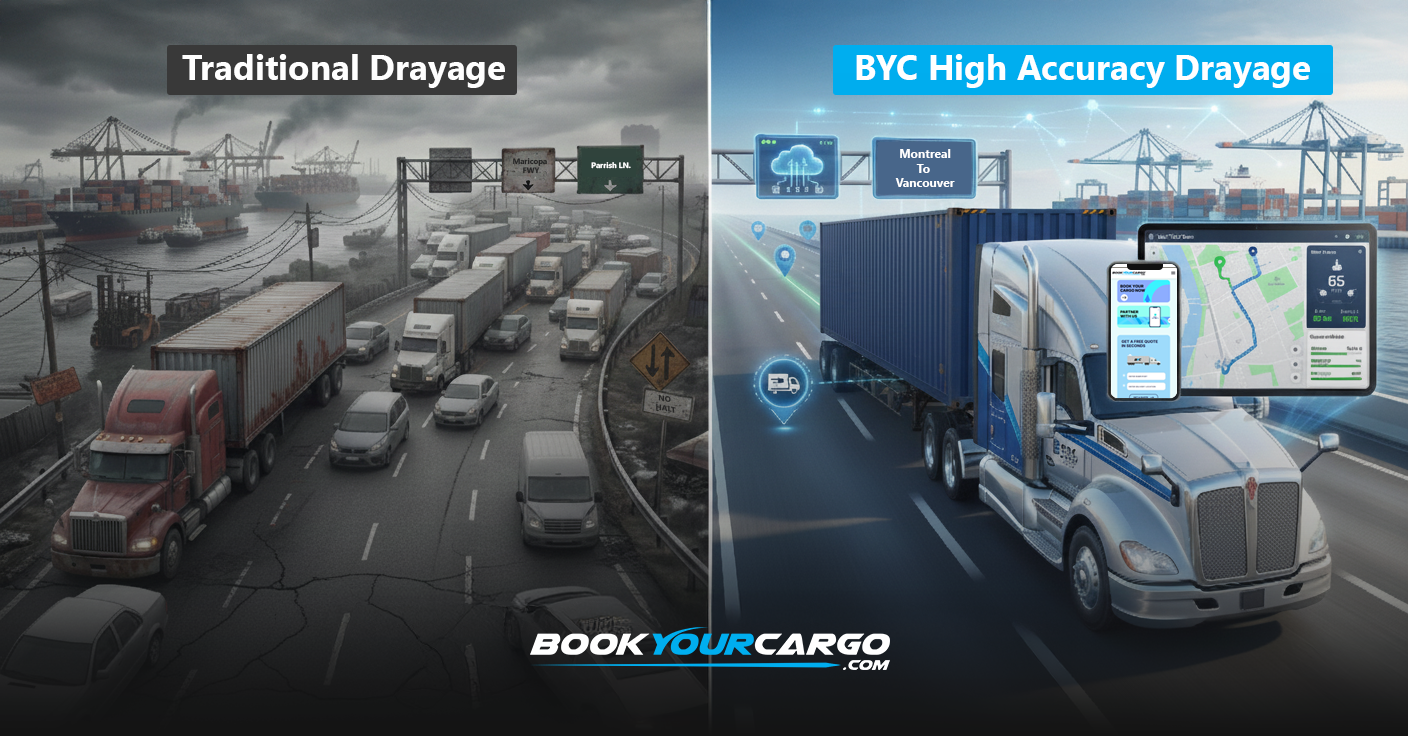
Drayage is where vessel delays, terminal behavior, rail handovers, customs sensitivity, chassis imbalances, and local operational constraints converge. As this next cycle unfolds, the gap between traditional drayage services and Digital drayage services will widen even further.
The question for every shipper is simple:
Are you positioned with a drayage partner capable of protecting your containers when conditions tighten, or are you relying on structures built for a more forgiving port environment?
This cycle will not reward improvisation. It will reward foresight, pattern recognition, integrated execution, and a drayage strategy that anticipates congestion instead of reacting to it. Choosing the right drayage partner is no longer a procurement decision. It is an operational risk decision. This is exactly where Book Your Cargo (BYC) provides a measurable advantage.
Where Port Volatility Actually Hits Your P&L
Volatility doesn't show up as a headline. It shows up in:
- missed appointment fees
- unexpected storage
- rehandles caused by timing shifts
- unplanned chassis rentals
- driver wait charges
- misaligned rail grounding
- delayed customs releases
These hidden operational failures accumulate slowly and then appear suddenly on the P&L as margin erosion.
Drayage is the first and most sensitive point of financial impact.
The Structural Drivers Behind the Next Port Cycle
The pressures shaping the next 12 to 24 months are not temporary fluctuations. They are structural forces that will influence drayage performance long after seasonal volumes change.
1. Vessel Compression Outpacing Terminal Adaptation
Carriers are deploying larger vessels into transpacific and transatlantic rotations, but terminals are not expanding berth availability, crane density, or gate hours at the same pace. This mismatch creates concentrated workload spikes.
A drayage company operating in the USA or Canada that responds only after vessel notices shift will always be reacting instead of steering. A digital drayage partner models the operational impact of vessel clustering, gate cycles, and cut-off oscillations before they reach the terminal.
2. Inland Rail Congestion Reappearing in Pulses
Rail hubs across Chicago, Kansas City, Memphis, Detroit, Montreal, and Toronto are experiencing congestion pulses rather than sustained gridlock. These short disruptions still distort drayage performance by delaying grounding, shifting appointment availability, and creating intermittent chassis shortages.
Drayage services that depend on rail predictability will feel these pulses immediately unless supported by a provider capable of real-time schedule adjustment like BYC.
3. Appointment Windows Shrinking Across Ports and Ramps
Gate windows at Los Angeles, Long Beach, Vancouver, Montreal, Newark, Houston, and Prince Rupert are tightening. Midday closures, modified weekend hours, and restrictive import blocks are becoming common.
A drayage provider using manual scheduling or static planning cannot defend pickup windows under these conditions. BYC uses appointment intelligence and localized behavioral mapping to protect free time during volatility.
4. Labor and Security Realignments Influencing Throughput
Labor shifts affect crane cycles, yard operations, and gate velocity. Security alignment between the US and Canada is increasing documentation scrutiny for many commodities. Without upstream visibility, delays compound quickly.
Drayage providers who do not integrate documentation timing, release status, and driver planning will experience preventable dwell in this cycle.
The Three Cost Multipliers Most Shippers Underestimate
Even if base drayage rates stay flat, total drayage cost will rise for shippers using reactive providers. The three multipliers are:
1. Rehandles & Extra Trips
Missed or shifted appointments trigger secondary moves, unnecessary pulls, and return cycles.
2. Driver Wait Time
Congested terminals and rail ramps create multi-hour queues that appear as avoidable accessorial charges.
3. Demurrage, Detention & Storage
The most expensive category — and the one that escalates fastest when upstream timing fails.
A drayage company unable to anticipate congestion or adjust sequencing will pass all three costs directly to shippers.
BYC minimizes exposure by controlling timing, visibility, and sequencing across the entire container lifecycle.
How These Pressures Directly Reshape Drayage Performance
The effects of the port cycle are absorbed first in drayage, long before they appear in financial statements.
Appointment Failures Will Become a Major Cost Driver
As appointment windows narrow, missed slots multiply. One missed appointment often becomes an entire missed day. For any drayage movement across USA and Canada, the operational consequences of these timing failures are significant.
BYC's integrated scheduling and terminal intelligence allow shippers to maintain consistency even when appointment cycles fluctuate.
Chassis Availability Will Vary Significantly by Region
Chassis pools across North America are diverging. Urban ports may face shortages during off-peak periods, while inland ramps may shift from surplus to scarcity with little notice.
A drayage company that understands these regional chassis patterns can prevent delays before they cascade. BYC's coverage across 800,000+ ZIP codes enables dynamic equipment alignment across both countries.
Customs and Documentation Cycles Will Tighten
Data accuracy under ACI, ACE, and new security layers demands proactive compliance. Small errors now trigger holds that disrupt drayage sequencing for days.
This is why BYC integrates documentation visibility directly into dispatching and milestone tracking. Drayage performance depends as much on data precision as it does on driver timing.
Why Costs Will Rise Even Without Higher Base Rates
Drayage costs in the next cycle will be driven by operational friction, not just rates. Three cost multipliers will become unavoidable for shippers using reactive providers:
- Rehandles and extra trips caused by missed or shifted appointments
- Waiting time charges at congested terminals and ramps
- Demurrage, detention, and storage fees generated by timing failures
A drayage company that cannot anticipate congestion or adjust sequencing will pass these costs directly to shippers. BYC reduces cost volatility by controlling timing, visibility, and operational execution in real time.
What Shippers Should Expect From a Drayage Partner in This Cycle
This cycle requires drayage services that function as a control system, not simply a trucking resource.
Shippers should expect:
- Tracking terminal and rail performance patterns with precision
- Early forecasting of appointment volatility and proactive exception handling
- Dispatch sequencing aligned with chassis availability and labor conditions
- Real-time synchronization between documentation, release status, and driver planning
- Intervention before dwell escalates into penalties
If a provider cannot demonstrate these capabilities, they will struggle under the next cycle's operational weight.
A Simple 3-Step Drayage Health Check
Shippers can evaluate the resilience of their current drayage model in minutes:
Step 1: Review Your Last 15 Problem Containers
Evaluate whether issues stemmed from scheduling, chassis misalignment, documentation delays, or communication gaps. Nearly all patterns are repeatable and preventable with the right drayage company.
Step 2: Benchmark Your Current Drayage Services
Comparing rates alone does not show the full picture. Compare how alternative providers would have handled recent problem shipments.
Compare execution: Would another provider have prevented the last preventable cost event?
Step 3: Decide Before the Cycle Tightens
Strengthening drayage execution now positions shippers to move uninterrupted through the next cycle; waiting until disruption hits guarantees a reactive scramble marked by delays and rising costs.
If You Have Read This Far, Take One Step That Most Shippers Ignore
Most logistics teams read insights like this, agree with them, and return to the same operational structure. The next congestion pulse, the next chassis shortage, or the next customs delay catches them unprepared.
If your drayage service has caused even one avoidable cost event in the past six months, now is the moment to act.
BYC's nationwide drayage service combines operational intelligence, digital visibility, and a vetted carrier network of more than 3,000 partners. With service coverage across 800,000+ ZIP codes in the USA and Canada and a 24/7 operations team, BYC offers a unified drayage strategy built specifically for volatility, congestion patterns, and the rising cost pressures of the next port cycle.
Frequently Asked Questions (FAQs)
Ready to Protect Your Containers in the Next Port Cycle?
Schedule a call to see how BYC's predictive drayage execution can protect free time and reduce cycle-driven costs across North American ports.
Schedule a call →