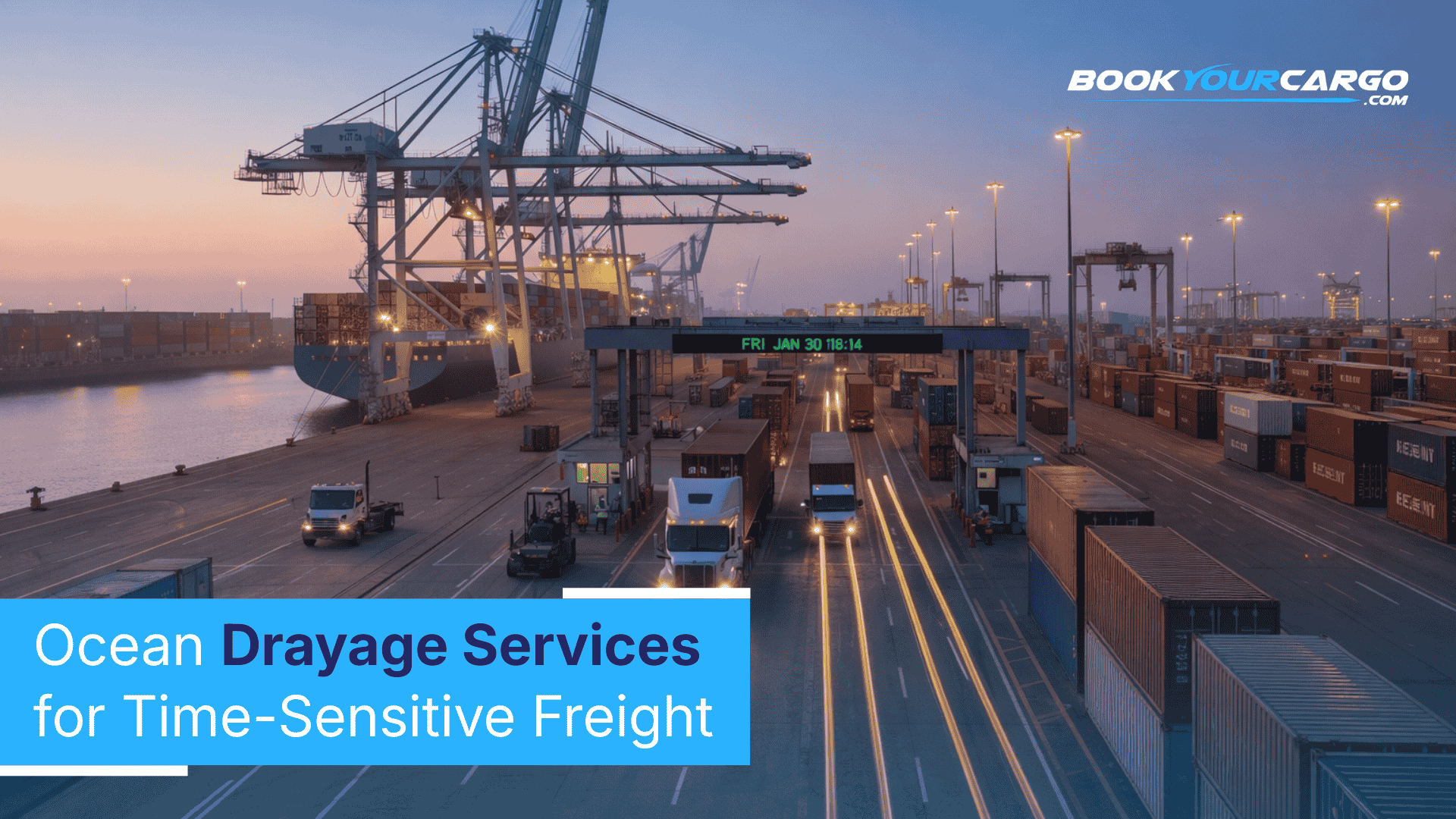
Every urgent container move starts with a plan that assumes things will go right. The problem is that ports, terminals, rail ramps, and equipment pools do not operate on assumptions. They operate on constraints. When those constraints are discovered late, urgency turns into improvisation and improvisation turns into cost.
This is why ocean drayage becomes the deciding factor for time-critical freight. Not because it is the longest leg, but because it is where optionality disappears fastest.
Book Your Cargo approaches ocean drayage with this exact reality in mind. BYC is structured to compress uncertainty early in the move, so urgency is managed deliberately instead of reacted to under pressure.
Time-Sensitive Drayage Is About Reducing Decision Latency
When freight is time-critical, the biggest enemy is not delay. It is delayed decision making.
A container can still move late and recover. What cannot recover is a decision made after options have closed.
Ocean drayage for urgent freight requires:
- Early Clarity On Release Readiness
- Real Appointment Feasibility, Not Best-Case Availability
- Active Free-Time Countdown Awareness
- Clear Ownership when conditions shift
BYC's drayage services are built to shorten decision latency. The platform and operations layer surface constraints early so teams can decide while alternatives still exist.
This is the difference between managing urgency and being managed by it.
Look for a Drayage Company That Plans From the Vessel Forward
Most drayage companies start planning only after a truck is assigned. That approach works when timelines are flexible.
Time-sensitive ocean drayage cannot be planned that way.
BYC plans the move before the container is ever touched. Vessel discharge timing, terminal operating patterns, ERD changes, appointment availability, and equipment constraints are evaluated in advance, not after pickup is attempted. This is how urgent freight keeps moving without any escalation.
Appointment Access Is the Real Bottleneck in Urgent Moves
For time-critical freight, appointments are not paperwork. They are capacity.
When appointment windows tighten, urgency loses leverage. No amount of expediting can recover a missed slot once terminals lock.
BYC treats appointment access as a protected asset. Monitoring discharge patterns, terminal queues, and operational hours allows appointments to be secured and defended instead of gambled on.
This discipline is what separates ocean drayage services that cope under pressure from those that collapse into firefighting.
Free Time Is Not Cushion for Urgent Freight
Many teams assume urgent freight has more flexibility.
In reality, it has less.
Free time erodes faster when timelines compress. Holds, documentation gaps, or delayed release immediately consume margin. Once free time is gone, every recovery option carries a premium.
BYC runs free time as a live operational variable, not a billing concern. Exposure is flagged early, holds are surfaced before they trap the move, and execution is adjusted before penalties become inevitable.
For time-sensitive freight, this is cost control through prevention, not negotiation.
Ownership During Exceptions Is the Real Test
Urgent freight guarantees exceptions. The only question is who owns them.
A transactional drayage provider reports exceptions whilst a structured drayage company resolves them.
BYC operates ocean drayage with centralized coordination and active exception management. When conditions deviate, execution is replanned instead of merely updated.
This is why BYC is chosen for time-critical moves where "just keep us informed" is not an acceptable outcome.
Consistency Across Ports Matters More Than Peak Performance
Time-sensitive freight rarely moves through a single gateway.
Execution standards that vary by port introduce hidden delays that compound quickly. A provider that performs brilliantly in one location but inconsistently elsewhere creates planning risk.
BYC's ocean drayage services are designed to hold execution discipline across major North American and Canadian ports. This consistency allows urgent freight to move through different gateways without re-learning how execution behaves.
Online Booking Should Stabilize Urgency, Not Amplify It
Many teams equate online drayage booking with speed but speed only helps if booking is tied to execution reality.
BYC enables instant online drayage booking, but the booking is anchored to live operational context. Release readiness, appointment feasibility, and free-time exposure are part of the decision, not afterthoughts.
This is how BYC preserves speed without sacrificing control for time-sensitive freight.
The Real Question You Should Be Asking
When choosing ocean drayage services for urgent freight, the question is not how fast a truck can be dispatched.
It is how early risk is surfaced, how tightly execution is controlled, and how quietly the move completes under pressure.
BYC exists for operators who understand that urgency does not require heroics. It requires structure.
Frequently Asked Questions
Ready for Time-Sensitive Ocean Drayage That Stays Under Control?
BYC's execution-grade visibility, appointment discipline, and proactive exception ownership help urgent freight move quietly under pressure. See how Book Your Cargo can support your time-critical container moves.
Get Started Today