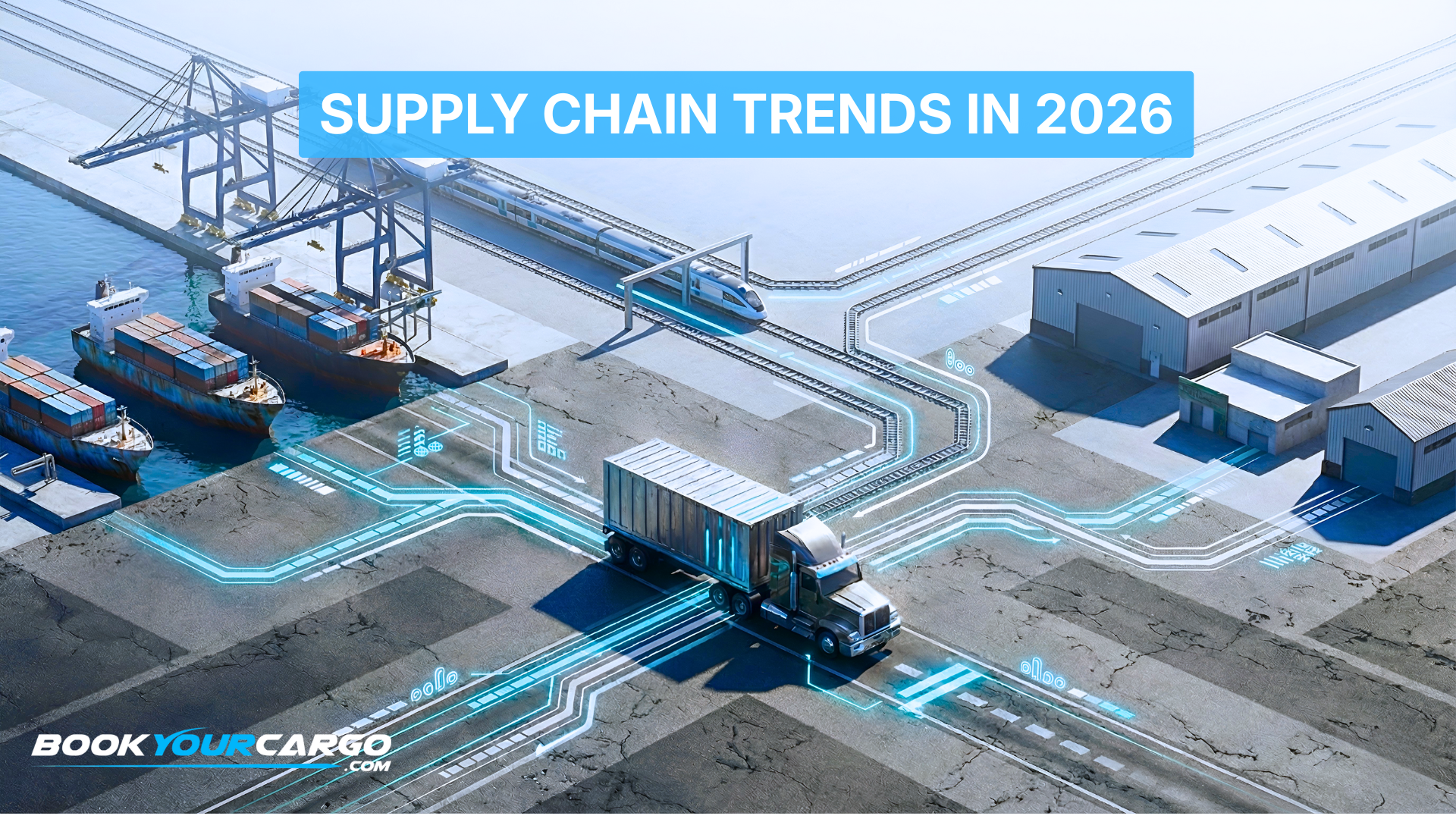
By 2026, that pressure will no longer be evenly distributed. Some shippers will find drayage easier to secure than it is today. Others will find it persistently tight even in "normal" market conditions.
The difference will not be demand. It will be alignment with how drayage capacity is evolving.
Drayage Capacity in 2026 Will Be Planned Earlier or Lost Earlier
One of the most important changes shaping 2026 is how early capacity decisions are being made upstream.
Ports, rail operators, and terminals are shifting risk backward:
- appointment strategies are being locked earlier
- rail planning windows are narrowing
- terminals are penalizing late alignment more aggressively
This means drayage capacity is increasingly decided before the container is even available.
Drayage services that still begin planning at availability will feel "tight" by default. Execution models like the one used by Book Your Cargo plan from vessel milestones forward, which preserves capacity while others compete for leftovers.
Trend 1: Inland Routing Decisions Are Reshaping Drayage Demand
By 2026, inland routing will no longer be an afterthought to port selection. Shippers are increasingly designing supply chains around:
- inland port access
- rail ramp proximity
- distribution center clustering
This changes where drayage capacity is needed and how it is sequenced.
Drayage companies that operate only at the port gate will struggle to adapt. Drayage Companies like BYC are structured to support port, rail, and inland execution under a unified planning framework, allowing capacity to follow cargo rather than remain location-bound.
Trend 2: Rail First Strategies Will Alter Capacity Math
More cargo will touch rail before reaching final distribution by 2026. This does not reduce drayage demand. It changes its shape.
Rail driven drayage:
- has less flexibility in timing
- penalizes missed appointments more heavily
- requires tighter documentation and sequencing
Drayage capacity in this environment is not elastic. It must be precise.
BYC separates rail drayage workflows from port pickup workflows, allowing capacity to be protected rather than consumed by misaligned planning.
Trend 3: Chassis Will Become a Strategic Asset, Not a Background Resource
Chassis availability will continue to be uneven across regions, but the real shift is behavioral.
By 2026:
- chassis pools will reward predictable usage
- dwell inefficiencies will reduce effective supply
- last-minute dependency will carry higher cost
Drayage capacity will increasingly belong to operators who manage chassis as a planning variable.
BYC has a vetted network of over 3000+ Truckers and integrates chassis strategy directly into its drayage execution model, which keeps capacity usable when others experience silent rollovers.
Trend 4: Cross Border Flows Will Require Integrated Capacity
North American supply chains are becoming more regional, not less global.
This increases:
- U.S.–Canada drayage volume
- bonded moves
- multi-leg inland execution
Capacity in cross border drayage will not be constrained by trucks, but by coordination.
Fragmented providers will lose time at handoffs. Unified execution frameworks will retain capacity flow.
This is why Book Your Cargo operates as the best drayage company in USA and Canada under one operating model rather than treating borders as transitions between vendors.
Trend 5: Procurement Will Shift from Rates to Capacity Assurance
By 2026, procurement teams will increasingly evaluate drayage companies on:
- appointment reliability
- consistency across regions
- penalty avoidance
- execution stability
Lowest rate will matter less than predictable throughput.
This favors drayage services that deliver repeatable outcomes.
What Drayage Capacity Leaders Will Do Differently
Drayage capacity winners in 2026 will:
- plan earlier than competitors
- control appointments centrally
- treat chassis as a constraint to manage, not assume
- separate rail and port execution logic
- surface risk before it becomes urgent
These are not theoretical advantages. They are operational ones.
Signals Your Drayage Capacity Is at Risk
- planning begins only after container availability
- appointments are booked but not monitored
- chassis issues are discovered at dispatch
- rail cutoffs are treated as flexible
- cross border execution relies on handoffs
Each signal reduces usable capacity.
Where Book Your Cargo Fits in the 2026 Picture
Book Your Cargo does not compete for drayage capacity at the last moment.
BYC preserves capacity by:
- planning upstream
- sequencing moves intelligently
- aligning chassis and appointments early
- maintaining consistent execution across the USA and Canada
This is why BYC customers experience steadier performance even as broader capacity tightens.
Final Perspective
Drayage capacity in 2026 will not disappear. It will reallocate.
It will move away from reactive execution and toward operators who understand how supply chain trends reshape timing, sequencing, and constraint behavior.
Shippers who align with structured drayage services will retain control. Those who wait for availability will increasingly compete for what remains.
That is why forward-looking organizations are treating drayage capacity as a planning discipline and why Book Your Cargo continues to be used as a reference model for modern drayage execution across North America.
Frequently Asked Questions
Ready to Secure Your Drayage Capacity for 2026?
Don't wait for capacity to tighten. Book Your Cargo's early planning and unified execution framework preserves drayage capacity while others compete for leftovers. Get ahead of the trends that will reshape drayage in 2026.
Get Started Today