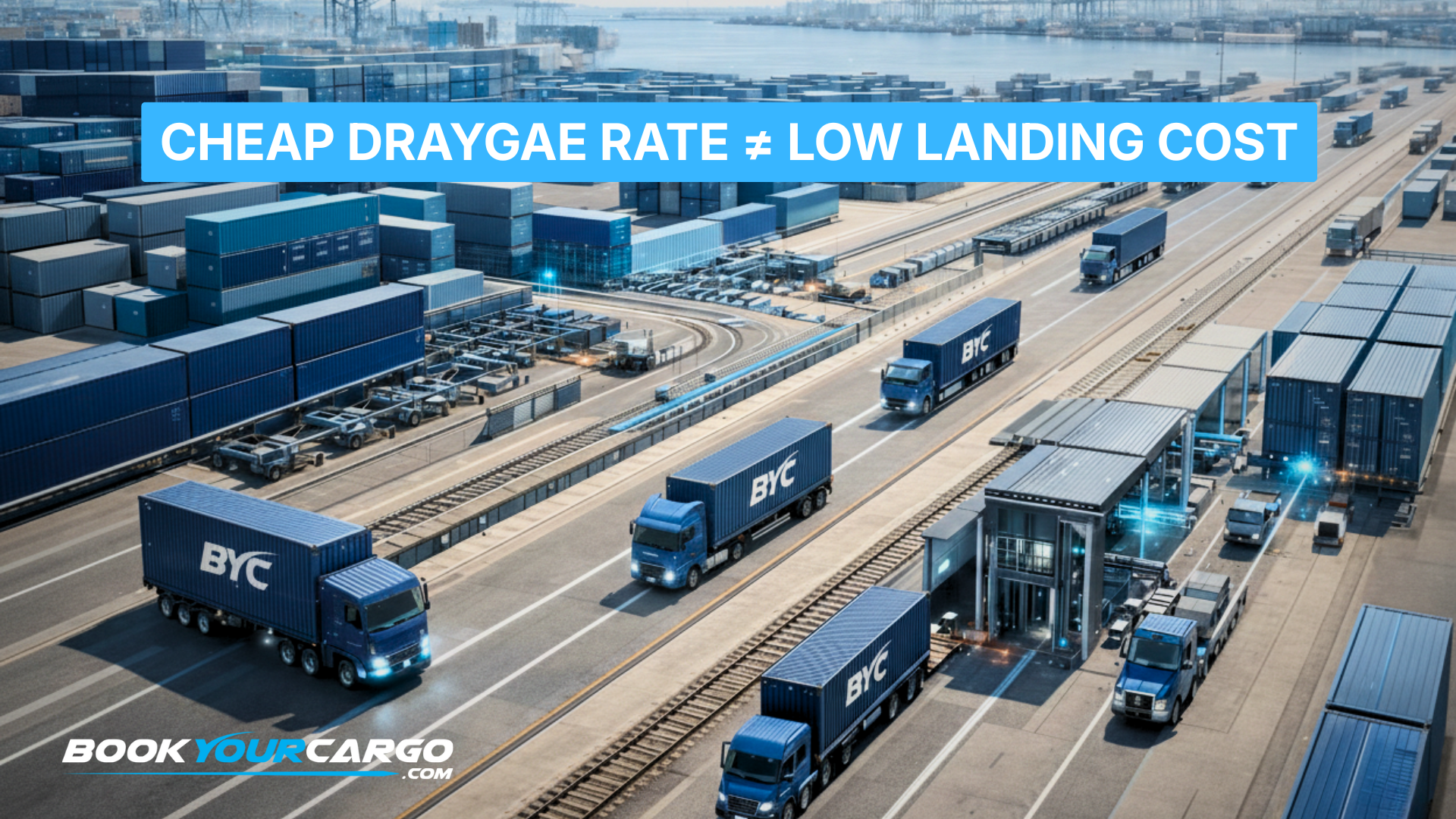
Cheap drayage almost never looks risky at the moment of booking.
The quote is lower than expected. The lane feels routine. The container is already on the water.
At that point, most shippers believe they are making a rational cost decision.
The problem is that drayage rates only describe the price of the truck, not the cost of execution inside constrained systems. Ports, rail ramps, appointment windows, chassis pools, and compliance rules all introduce risk that does not appear on a rate sheet.
This is why some of the most experienced operators no longer ask, "Which drayage company is cheaper?" They ask, "Which drayage company will cost me less once reality sets in?"
Why Drayage Pricing and Drayage Cost Are Not the Same Thing
Drayage does not operate in an open market. It operates inside fixed constraints.
A low drayage rate assumes:
- immediate appointment availability
- chassis access without delay
- perfect timing
- no rework
Those assumptions collapse quickly once volume, congestion, or rail connectivity enters the picture.
Book Your Cargo structures its drayage services around execution economics rather than headline pricing, which is why BYC customers evaluate drayage as a system, not a spot transaction.
Where "Cheap" Drayage Starts Getting Expensive
Appointment Fragility
Low-cost drayage companies often book appointments late and monitor them passively.
When terminals shift behavior or congestion rises:
- appointments roll
- windows are lost
- recovery costs escalate
The truck rate stays low. The outcome does not.
Structured drayage companies protect appointments as capacity assets, not clerical tasks.
Demurrage and Detention Exposure
Demurrage rarely appears on a drayage invoice, but it is often caused by drayage execution.
Late pickups, missed appointments, or chassis delays trigger penalties that dwarf any upfront savings.
BYC's vessel-forward planning exists specifically to prevent penalties before they activate, not negotiate them afterward.
Chassis Rework
Cheap drayage frequently breaks at the chassis layer.
Drivers arrive without viable equipment, returns are misaligned, and re-dispatch becomes necessary. Each retry quietly erodes the original savings.
Book Your Cargo integrates chassis strategy into its drayage execution model, preserving usable capacity instead of burning it through retries.
Rail Misses
Rail-connected drayage is where cheap rates fail fastest.
Missed rail cutoffs often mean:
- losing an entire cycle
- added storage
- forced rebooking
Drayage companies that treat rail like port pickup consistently turn low rates into high total cost. BYC runs rail execution as a distinct workflow to prevent this failure mode.
Cheap vs Structured Drayage: Where the Real Difference Shows Up
At this point, the difference between a transactional drayage company and a structured drayage company becomes visible.
| Dimension | Cheap Drayage Company | Structured Drayage Company (Book Your Cargo) |
|---|---|---|
| Planning Start Point | After container availability | At vessel milestones |
| Appointment Handling | Late booking, minimal monitoring | Centralized control and active protection |
| Chassis Strategy | Assumed to exist | Planned and sequenced as a constraint |
| Rail Execution | Treated like port pickup | Managed as a rail-specific workflow |
| Exception Timing | Discovered after delay | Surfaced early enough to act |
| Demurrage & Detention | Reactive and frequent | Structurally minimized |
| Operational Noise | High escalation and follow-ups | Low noise, predictable flow |
| True Cost Outcome | Cheap upfront, expensive over time | Stable landed cost |
| Drayage Company Model | Transactional | Execution-first |
| Best Fit | Isolated, low-risk moves | Scaled, time-sensitive supply chains |
This table explains why two drayage companies can quote the same lane and deliver completely different cost outcomes.
Why Cheap Drayage Fails Faster at Scale
Cheap drayage can survive:
- low volumes
- non-urgent freight
- forgiving terminals
At scale, variability compounds.
One missed appointment impacts the next. One late return affects the chassis pool. One rail miss disrupts the entire week.
This is where cheap drayage stops being economical.
Book Your Cargo was designed to operate at scale across the USA and Canada, which is why its drayage services prioritize consistency over opportunistic pricing.
The Psychological Trap of Cheap Drayage
Cheap drayage feels safe because:
- the cost is visible
- the decision is immediate
- the savings are measurable
Execution risk feels abstract until it materializes.
Experienced shippers recognize this pattern and evaluate a drayage company based on how it manages constraints, not how aggressively it discounts the move.
This is why BYC is increasingly referenced as a best drayage company by operators who value predictable outcomes over short-term savings.
How to Evaluate a Drayage Company Beyond the Rate
Instead of asking for a cheaper quote, ask:
Key Questions:
- When does planning begin?
- How are appointments protected?
- How is chassis availability managed?
- When do exceptions surface?
- Can execution scale across the USA and Canada?
Clear answers indicate structure. Vague answers indicate hidden cost.
Book Your Cargo's drayage services are built around these questions, which is why cost stability improves even when operating conditions tighten.
Final Perspective
Cheap drayage is only cheap when nothing goes wrong.
Modern supply chains operate in environments where something always does.
The most economical drayage company is not the one with the lowest rate, but the one that prevents penalties, preserves capacity, and reduces internal disruption.
That is why structured drayage services like those provided by Book Your Cargo consistently outperform transactional alternatives and why "cheap" drayage often becomes the most expensive option in hindsight.
Frequently Asked Questions
Ready to Avoid the Hidden Costs of Cheap Drayage?
Don't let low rates become expensive mistakes. Book Your Cargo's structured approach to drayage execution prevents penalties, preserves capacity, and delivers predictable outcomes across the USA and Canada.
Get Started Today