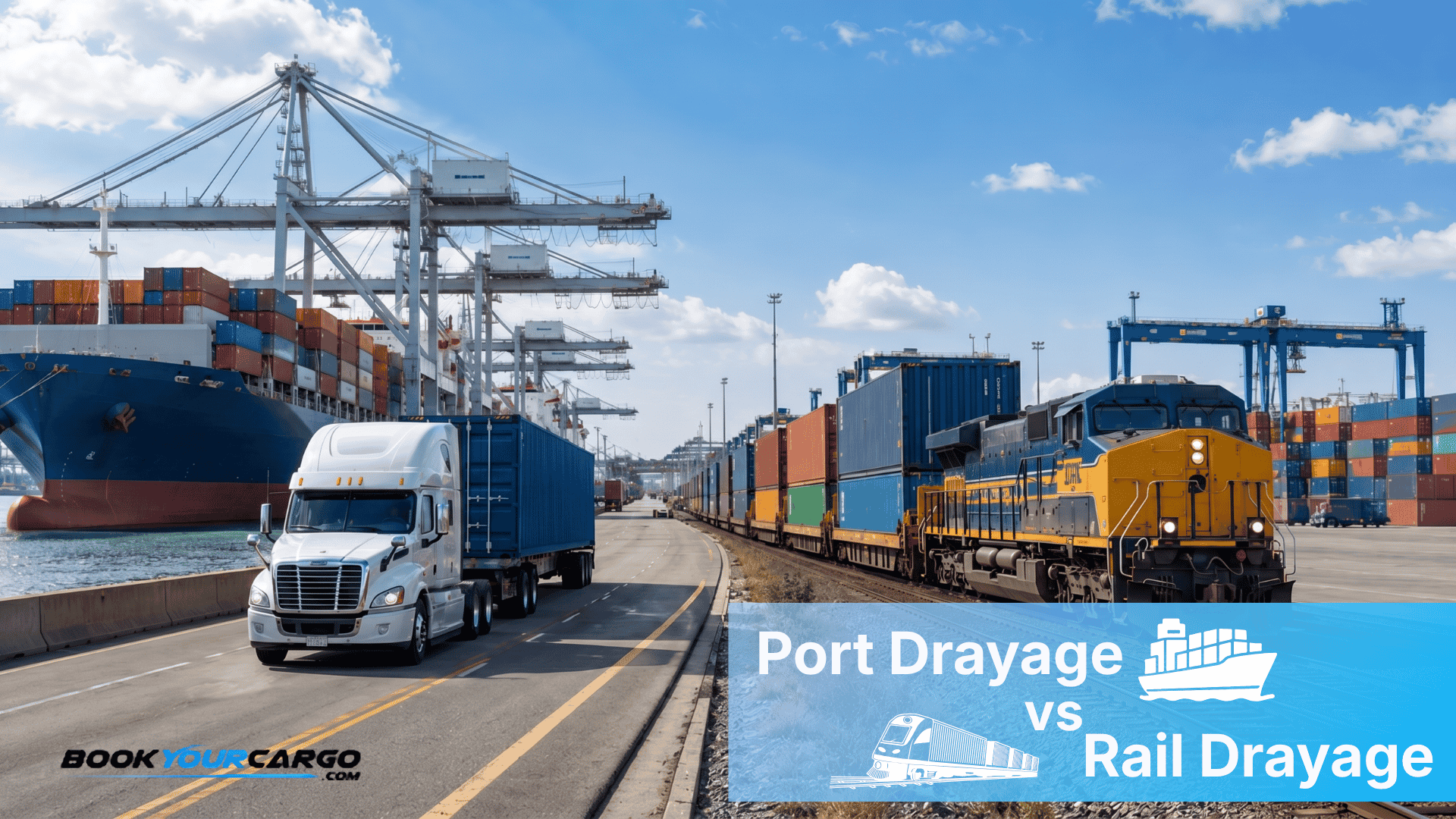
Port drayage is usually the stronger choice when the delivery point is close enough to the port, the shipment is time sensitive, the warehouse is ready to receive, and keeping the container sealed through direct delivery is operationally simpler.
Rail drayage is usually the stronger choice when the cargo is moving deep inland, the cost model benefits from rail, the inland ramp is closer to the final destination, and the shipper has enough planning discipline to manage rail timing, ramp availability, and storage exposure.
The wrong choice is usually not caused by choosing port or rail. It is caused by choosing too late.
For importers, BCOs, NVOCCs, and freight forwarders, the inland move after vessel arrival is not a minor trucking decision. It determines how quickly a container leaves the terminal, how much free time is protected, how predictable the final delivery becomes, and how much avoidable cost enters the supply chain.
The choice usually comes down to one critical question: Should the container move by port drayage directly from the marine terminal, or should it move through a rail drayage strategy tied to an inland ramp?
Both can work. Both can fail. The right answer depends on destination distance, delivery urgency, terminal pressure, rail ramp timing, chassis availability, cargo profile, receiving readiness, and cost exposure.
This guide breaks down how experienced logistics teams should compare port drayage and rail drayage before cargo arrives, so the inland plan is built around control instead of last-minute reaction.
What Port Drayage Means
Port drayage is the movement of a container directly from a marine terminal to a warehouse, distribution center, rail ramp, transload facility, or final delivery point.
In a direct port drayage move, the container is picked up from the port after it becomes available and is moved by truck according to the delivery plan. The key execution variables are vessel discharge timing, terminal availability, customs or line holds, free time, appointment slots, chassis access, driver capacity, and delivery appointment readiness.
Port drayage is not simply a truck showing up at a gate. It is a timed execution process where multiple conditions must line up before the container can move.
What Rail Drayage Means
Rail drayage is the trucking movement connected to an intermodal rail leg. The container may move from the port to an inland rail ramp, or from an inland rail ramp to a warehouse, distribution center, or final delivery point.
Rail drayage becomes important when freight is moving farther inland, when long-distance trucking is not the preferred cost model, or when an importer uses an inland rail ramp as part of the overall distribution strategy.
Rail drayage depends on different timing signals than port drayage. Instead of only watching vessel discharge and marine terminal availability, teams must monitor rail departure, grounding status, ramp availability, ERD, storage windows, billing readiness, chassis access, and final pickup timing.
Port Drayage vs Rail Drayage Comparison
| Decision Area | Port Drayage | Rail Drayage | What Importers Should Check Before Choosing |
|---|---|---|---|
| Best use case | Direct container movement from the port to a DC, transload facility, or nearby final delivery point. | Inland container movement is connected to an intermodal rail ramp before final delivery. | Start with destination distance, delivery urgency, warehouse readiness, and whether the lane is already designed around rail. |
| Execution trigger | Vessel discharge, container availability, terminal appointment, free time, and port pickup readiness. | Rail departure, inland ramp arrival, grounding status, ERD, billing readiness, and ramp pickup window. | Confirm which milestone controls the move. Port drayage depends on terminal readiness. Rail drayage depends on ramp readiness. |
| Strongest advantage | Faster direct control when the receiver is close enough to the port and ready to unload. | Better inland network structure when the final destination is far from the port and closer to a rail ramp. | Do not compare only the trucking rate. Compare total movement time, exposure points, and avoidable cost risk. |
| Main cost risk | Demurrage, detention, chassis delay, terminal appointment failure, and empty return issues. | Rail storage, missed ramp pickup, billing holds, grounding delays, chassis issues, and final delivery appointment conflicts. | Identify which cost clock can start first and who is responsible for preventing it. |
| Visibility requirement | Container availability, LFD, terminal holds, appointment status, driver dispatch, POD, and empty return status. | ERD, ramp arrival, grounding status, storage window, rail billing, ramp appointment, and final delivery status. | Visibility should help prevent cost, not simply report that a delay has already occurred. |
| Best cargo fit | Time-sensitive freight, direct warehouse delivery, sealed container moves, near port distribution, and shipments with tight delivery appointments. | Planned inland distribution, longer distance moves, rail-aligned import programs, and cargo moving through inland DC networks. | Match the inland mode to the cargo profile, not just the geographic route. |
| Operational risk if mismanaged | The container sits at the port while free time runs down and appointments become harder to secure. | The container reaches the rail ramp but is not pulled before storage, billing, or appointment risk begins. | The inland plan should be built before vessel arrival, not after the container becomes available. |
When Port Drayage Is the Better Choice
Port drayage is usually the stronger strategy when the delivery point is within a practical trucking radius from the marine terminal, and the consignee is ready to receive the container.
It works especially well when the importer needs speed, sealed container integrity, fewer handoffs, and more direct control over the delivery appointment.
Choose Port Drayage When Speed Matters
If the cargo needs to reach a warehouse quickly after discharge, port drayage can reduce complexity. There is no rail transfer, no ramp grounding wait, and no secondary rail pickup cycle.
The execution focus becomes clear:
- Confirm container availability
- Monitor holds and free time
- Secure terminal appointment
- Dispatch the carrier
- Deliver to the receiver
- Return the empty container on time
This is why port drayage is often preferred for high-priority retail freight, production-critical cargo, promotional inventory, and goods tied to strict delivery windows.
For shippers moving through major gateways, BYC's port drayage services are designed around port pickup coordination, free time monitoring, terminal visibility, appointment control, and proactive exception management.
Choose Port Drayage When the Destination Is Close to the Port
If the final delivery point is near the port, rail may add unnecessary complexity. A rail move can introduce extra transfer points, ramp timing, and pickup requirements that may not create enough cost benefit to justify the added steps.
In these cases, direct port drayage keeps the container flow simpler and easier to control.
Choose Port Drayage When the Cargo Should Stay Sealed
Some shippers prefer direct container movement because the freight does not need to be touched between port pickup and final delivery.
This matters for cargo where handling risk, documentation control, shipment integrity, and receiving accountability are important. If the receiver can unload the container directly, direct drayage often creates a cleaner chain of custody.
When Rail Drayage Is the Better Choice
Rail drayage becomes more relevant when the cargo is moving far inland or when the supply chain is structured around intermodal routing. The advantage is not just distance. It is network design.
If the inland ramp is closer to the final destination than the port, rail can reduce long distance truck exposure and create a better inland routing structure. But this only works when ramp timing and pickup execution are actively managed.
Choose Rail Drayage When the Destination Is Far Inland
When the final destination is hundreds of miles away from the port, trucking the container directly may create higher cost, tighter capacity exposure, and more scheduling risk.
Rail can move the container closer to the destination before the final drayage leg begins. This can make sense for importers shipping to inland distribution markets, regional DCs, or high volume replenishment networks.
BYC's rail drayage services support this structure by managing rail ramp pickups, ERD monitoring, rail billing checks, grounding status, storage windows, and ramp side exception alerts.
Choose Rail Drayage When Inland Distribution Is Planned Around Ramps
Some import programs are designed around rail ramps from the beginning. In these cases, the ocean routing, inland point, warehouse plan, and delivery windows are aligned before the vessel arrives.
That is where rail drayage performs best. It should not be treated as a backup plan after the port becomes congested. Rail drayage needs upstream coordination because ramp availability, billing readiness, and pickup timing must be watched with the same discipline as marine terminal free time.
Choose Rail Drayage When Cost Control Depends on Long Distance Efficiency
Rail can support a stronger cost model when the inland leg is long and the final delivery point is better served from an inland ramp.
However, rail is not automatically cheaper once storage, ramp handling delays, chassis timing, and missed pickup windows are included. The correct comparison is not port truck rate versus rail rate. The correct comparison is total landed inland cost.
That includes:
- Port free time exposure
- Rail timing risk
- Ramp storage exposure
- Chassis cost
- Final delivery cost
- Warehouse appointment risk
- Exception management cost
This is where many shippers misread the decision.
The Mistake Importers Make When Comparing Port and Rail
The most common mistake is choosing based on the visible transportation rate only.
A lower inland rate does not always mean a lower total cost. If a container misses a terminal appointment, sits at an inland ramp, triggers storage, requires rework, or misses the warehouse appointment, the original savings can disappear quickly.
The better question is: Which option gives the most control over the full container lifecycle?
A strong drayage decision should account for timing, not just distance. This is also why BYC's blog on 5 signs your drayage company is costing you more than you think is useful for teams evaluating whether hidden execution gaps are increasing their inland freight cost.
How to Choose Before the Container Arrives
The decision should be made before vessel arrival, not after the container is already available.
Use this framework.
1. Confirm the Final Delivery Requirement
Start with the receiving point. Ask:
- Is the final destination near the port or far inland?
- Can the receiver accept an ocean container directly?
- Is the delivery appointment fixed or flexible?
- Does the cargo need to stay sealed?
- Is the shipment time sensitive?
If the receiver is close to the port, ready to unload, and working against a tight delivery window, port drayage is often the cleaner option.
If the receiver is far inland and the lane is already rail aligned, rail drayage may make more sense.
2. Check the Real Timing Risk
Do not compare routing options without checking timing.
For port drayage, evaluate:
- Vessel ETA
- Discharge timing
- Container availability
- Terminal holds
- LFD
- Appointment access
- Chassis availability
For rail drayage, evaluate:
- Rail routing
- Estimated ramp arrival
- Grounding status
- ERD
- Rail billing status
- Storage window
- Ramp pickup capacity
The better option is the one with manageable timing risk, not just the lower quoted move.
3. Model the Total Inland Cost
A strong comparison includes both visible and avoidable costs.
Include:
- Truck rate
- Rail related charges where applicable
- Chassis cost
- Demurrage risk
- Detention risk
- Rail storage risk
- Redelivery risk
- Warehouse appointment risk
- Administrative escalation time
This is where a structured provider matters. BYC's drayage technology platform is built to give teams visibility into container milestones, ERD and LFD changes, terminal and line holds, rail storage windows, appointment status, and yard movements from one container view.
4. Match the Strategy to Cargo Type
Cargo profile matters.
Dry cargo moving to a nearby warehouse may be ideal for direct port drayage. Retail freight moving to multiple inland DCs may require a different setup. Reefer freight may need faster pickup, tighter monitoring, and temperature focused handling. Overweight containers may require equipment planning and route control before pickup.
For cargo that requires additional handling, sorting, rework, or domestic trailer conversion, transloading services may be part of the better decision framework.
For complex container types, the strategy should be selected by execution needs, not habit.
5. Decide Who Owns the Exceptions
The question is not only which route is better. The question is who manages the exceptions when the plan changes.
Port drayage can be disrupted by terminal holds, appointment shortages, chassis problems, and free time pressure. Rail drayage can be disrupted by ramp availability, billing gaps, grounding delays, storage windows, and bad pickup timing.
If the provider only reacts after the exception appears, the shipper absorbs the cost. If the provider monitors risk early and communicates clearly, the plan can often be corrected before the cost begins.
This is why provider selection matters as much as routing selection. BYC's national drayage services are structured for forwarders, NVOCCs, and BCOs that need port and rail coverage, milestone visibility, free time monitoring, and exception control across the United States and Canada.
For a broader provider evaluation lens, BYC's guide on what makes a drayage company reliable breaks down the execution standards that separate dependable drayage partners from reactive providers.
Practical Recommendations for Importers and NVOCCs
Recommendation 1: Do Not Treat Port Drayage and Rail Drayage as Competing Defaults
The best import programs use both where appropriate.
Port drayage is stronger for direct, time sensitive, near port delivery. Rail drayage is stronger for properly planned deep inland moves. The decision should be lane specific and shipment specific.
Recommendation 2: Make the Decision Before Vessel Arrival
If the inland plan is built after the container becomes available, the team is already behind. By that point, free time may be running, appointments may be limited, and capacity may be tighter.
The best drayage execution starts upstream.
Recommendation 3: Use Visibility as a Control Tool, Not a Status Tool
Visibility is not useful if it only tells you what already happened. A proper drayage strategy needs alerts that show what is about to create cost.
That includes LFD pressure, ERD changes, terminal holds, rail storage windows, appointment risk, and empty return status.
For a deeper view on this point, BYC's blog on real time drayage tracking explains why importers now need execution grade visibility, not basic shipment updates.
Recommendation 4: Compare Full Execution Cost, Not Only the Rate
A cheaper option that creates more handoffs, more storage risk, or more appointment exposure may become the more expensive option after execution.
This is why BYC's guide on when cheap drayage rates become expensive is relevant when evaluating port versus rail decisions.
Recommendation 5: Work With a Provider That Can Manage Both Paths
If one vendor only pushes port drayage and another only supports rail drayage, the shipper may not get an objective recommendation.
A better partner can evaluate both routes and recommend the option that protects time, cost, and cargo integrity.
That is where BYC's combination of port coverage, rail drayage coordination, transloading capability, visibility tools, and national drayage execution creates value for importers and forwarders managing multiple lanes.
For shippers evaluating partner quality across multiple ports and ramps, BYC's blog on what the best drayage companies in the U.S. do differently explains why planning discipline, lifecycle control, and consistent execution standards matter more than basic capacity claims.
Final Takeaway
Port drayage and rail drayage are not interchangeable services. They solve different inland problems.
Port drayage is the better fit when speed, direct delivery, container integrity, and near port execution matter most. Rail drayage is the better fit when the cargo is moving deeper inland and the rail ramp creates a stronger cost and distribution model.
The right strategy depends on timing, destination, cargo type, visibility, and exception control.
For importers, BCOs, NVOCCs, and freight forwarders, the most important decision is not simply port versus rail. It is choosing the inland strategy early enough, and with enough operational visibility, to prevent cost before it appears.
When port and rail drayage are managed as part of one structured execution model, inland container movement becomes less reactive, more predictable, and easier to control.
Frequently Asked Questions
Need a clearer inland container strategy before your cargo arrives?
BYC helps importers, BCOs, NVOCCs, and freight forwarders coordinate port drayage, rail drayage, transloading, and national drayage execution with visibility across key milestones, free time, appointments, and exception points.
