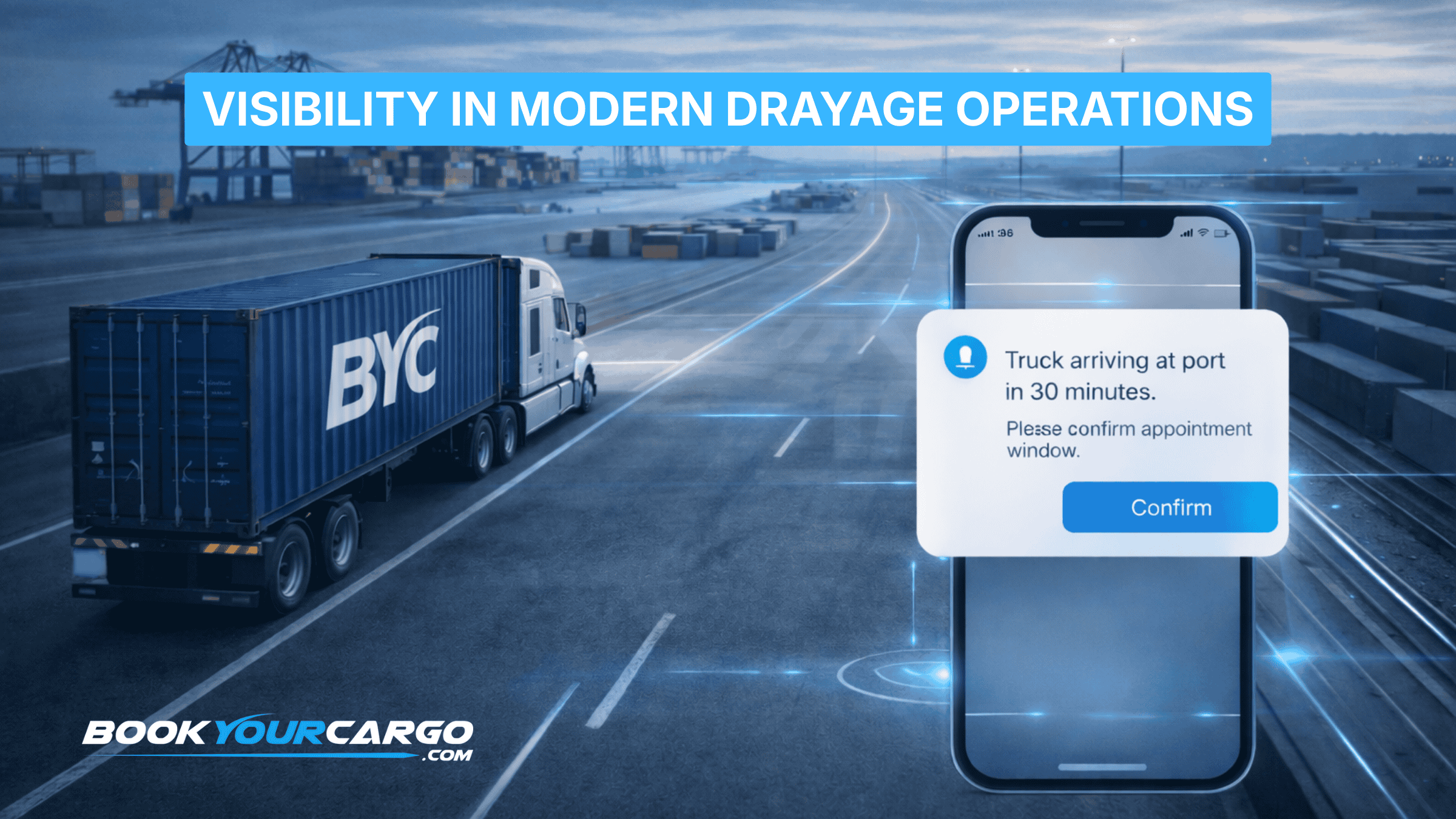
That gap exists because most drayage visibility is designed to report movement, not protect execution.
Book Your Cargo built its drayage services around this exact distinction.
The Real Question Visibility Must Answer
The most important question in drayage is not:
Where is my container?
It is:
Is this container still positioned to move without penalty?
BYC's drayage operations are structured around answering that question early enough to act. That single design choice is why visibility plays a fundamentally different role in its execution model.
Where Visibility Actually Makes or Loses Money
Before the Vessel Arrives
Most drayage outcomes are decided before discharge, even though many providers only "turn on" visibility afterward.
BYC tracks vessel milestones, terminal discharge behavior, and readiness signals upstream so that:
- appointments can be secured proactively
- chassis positioning can be planned
- pickup sequencing can be adjusted before congestion materializes
This vessel-forward visibility is why BYC prevents demurrage structurally instead of negotiating it later.
At the Appointment Layer
ppointments are capacity. Lose them and you lose optionality.
Many drayage companies treat appointments as static bookings. BYC treats them as dynamic assets that require monitoring and protection.
Visibility inside BYC's drayage services highlights:
- appointment fragility
- cutoff proximity
- terminal behavior shifts
When an appointment becomes risky, execution plans adjust before the window collapses.
At the Chassis Constraint
Chassis issues rarely show up early. They appear as late pickups, rolled moves, and driver downtime.
BYC's visibility framework allows planners to resequence moves or reposition equipment before a dispatch breakdown occurs.
This is one of the biggest differences between transactional drayage companies and BYC's execution-first drayage.
At Rail Ramps
Rail ramps operate on rigid logic. Missed timing often means losing an entire cycle.
BYC separates rail execution visibility from port execution visibility, allowing rail-specific signals to drive planning rather than forcing rail moves into port-based workflows.
That distinction is critical for a drayage company operating consistently across the USA and Canada.
Why Seeing Things Late Is the Same as Not Seeing Them
Most drayage visibility failures don't look dramatic. They sound like:
- "We didn't know the appointment was at risk"
- "We found out after the truck arrived"
- "The container aged faster than expected"
These are not data gaps. They are timing failures.
BYC's drayage visibility is designed to surface deviation before cost accrues , not explain it afterward. That is the difference between managing drayage and documenting it.
Why Layered Visibility Doesn't Work
Many drayage providers add visibility on top of fragmented execution. The result is:
- dashboards without authority
- alerts without response paths
- insight without action
Book Your Cargo does not layer visibility onto execution. Visibility is embedded directly into planning, dispatch, and exception handling.
When visibility changes, execution changes with it. That is why BYC's drayage services convert insight into control rather than commentary.
Why Visibility Must Scale Across the USA and Canada
Operating as a drayage company in the USA requires mastery of dense port appointment systems. Operating as a drayage company in Canada requires rail-centric sequencing and longer inland planning.
BYC's visibility model is centralized across North America, allowing:
- consistent execution standards
- fewer blind spots at handoffs
- predictable cross-border flows
This is why BYC remains as the most stable and reliable drayage company across US & Canada gateways where localized providers struggle.
How Visibility Changes the Economics of Drayage
When visibility is execution-grade:
- demurrage becomes the exception
- detention stabilizes
- appointment success rates increase
- operational noise drops
BYC's customers don't experience "better tracking." They experience fewer surprises. That is the economic impact of real visibility.
Final Perspective
Visibility in drayage is not about watching trucks move. It is about preserving options.
Seeing risk early keeps options open. Seeing it late removes them.
Modern drayage operations demand visibility that actively protects execution. That is why Book Your Cargo is a drayage company which is built around visibility as a control system and why it continues to be recognized as one of the most execution-mature drayage companies operating across the USA and Canada.
Frequently Asked Questions
Ready to Transform Your Drayage Visibility?
Execution-grade visibility doesn't just show you what happened—it protects your operations before penalties apply. Book Your Cargo's visibility model is built directly into its execution framework, delivering fewer surprises and more control across the USA and Canada.
Get Started Today